Contents
Implementation at Home and Community Level
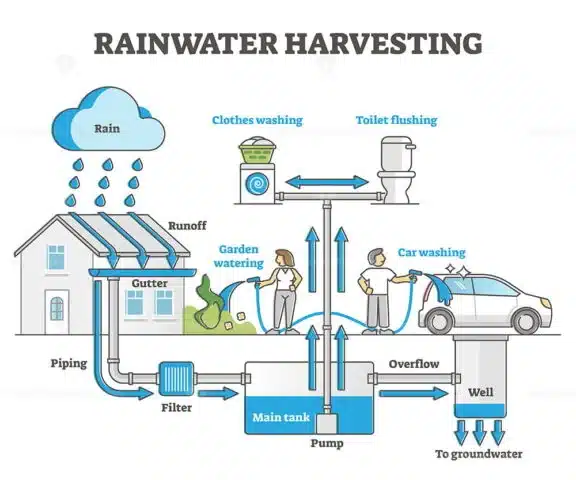
Rainwater harvesting can be implemented at various scales, from individual homes to entire communities. This section offers guidelines for residential rainwater harvesting, including system design and maintenance tips.
Community-scale projects have the potential to create a significant impact. By pooling resources and efforts, communities can implement larger and more efficient rainwater harvesting systems, serving as models for sustainable water management.
Legal and Regulatory Considerations

Navigating the legal and regulatory landscape is critical to implementing a rainwater harvesting system. Different countries, states, and even local municipalities may have varied regulations concerning collecting, using, and distributing rainwater. These laws often address water rights, building codes, and environmental impacts. This section highlights the importance of understanding these legal considerations to ensure rainwater harvesting systems comply with local laws and regulations.
In many regions, policies are evolving to encourage rainwater harvesting, reflecting a growing recognition of its environmental and societal benefits. Governments increasingly offer incentives and support for rainwater harvesting initiatives, such as tax breaks, grants, or technical assistance. However, in some areas, stringent regulations may exist due to water rights and resource management concerns. This part of the article delves into the complexities of these legal frameworks, offering guidance on navigating the regulatory environment and discussing the role of advocacy and public policy in promoting sustainable water practices.
Challenges and Solutions

Despite its benefits, rainwater harvesting faces several challenges. These include technical difficulties, maintenance issues, and public awareness gaps. This section discusses common obstacles and presents solutions and best practices to address them.
Innovative approaches and ongoing research in rainwater harvesting are vital for overcoming these challenges. By sharing knowledge and experiences, the global community can advance the effectiveness and adoption of rainwater harvesting systems.
Maintenance and Quality Control in Rainwater Harvesting

Maintaining a rainwater harvesting system is crucial to ensure its efficiency and longevity. Regular maintenance tasks include cleaning gutters and catchment areas, inspecting and repairing the conveyance system, and ensuring that storage tanks are clean and free of contaminants. This section explains the importance of these maintenance routines and provides practical tips for regular upkeep.
Quality control of harvested rainwater is equally important, especially if the water is used for domestic purposes. This involves monitoring water quality, implementing filtration and purification methods, and understanding the appropriate uses for harvested water based on its quality. By emphasizing the significance of maintenance and quality control, users can ensure that their rainwater harvesting systems are safe, reliable, and sustainable in the long run.
The Bottom Line
Rainwater harvesting is more than just a technique for water conservation; it’s a key element in pursuing a sustainable future. This blog post has explored the various facets of rainwater harvesting, from its historical roots to modern applications, environmental impacts, economic considerations, and practical implementation strategies. As the world grapples with climate change and water scarcity challenges, rainwater harvesting is a practical, cost-effective solution that can be adapted across different contexts and scales. Embracing this ancient yet ever-relevant practice can lead us toward a more sustainable and water-secure world.