
Phishing And Spear Phishing

Phishing attacks are deceptive attempts to obtain sensitive information by masquerading as a trustworthy entity in an email. These emails often urge recipients to provide personal information, such as passwords or credit card numbers. Spear phishing, a more targeted form of phishing, involves emails that are tailored to specific individuals, making them more convincing and thus more dangerous.
Despite their prevalence, phishing attacks can be mitigated. Awareness is the first line of defense; knowing how to identify suspicious emails is crucial. Look for red flags like generic greetings, spelling errors, and unfamiliar sender addresses. Technological solutions like anti-phishing software also play a vital role in filtering out these malicious emails. Regular training and simulated phishing exercises can help in keeping individuals vigilant against such attacks.
Ransomware

Ransomware, a type of malware, encrypts a victim’s files and demands a ransom for the decryption key. This form of cyber attack is often distributed via email, with users inadvertently downloading the ransomware by clicking on malicious attachments or links. The aftermath of a ransomware attack can be devastating, as victims lose access to their files and face demands for payment, often with no guarantee of file recovery.
Organizations are particularly vulnerable to ransomware attacks, which can halt critical operations and lead to significant financial losses. To defend against ransomware, it is essential to maintain regular backups of important data. Additionally, updating security systems and software, employing email filters, and educating employees about the dangers of opening suspicious emails are effective strategies to prevent ransomware infections.
Email Spoofing And Identity Theft
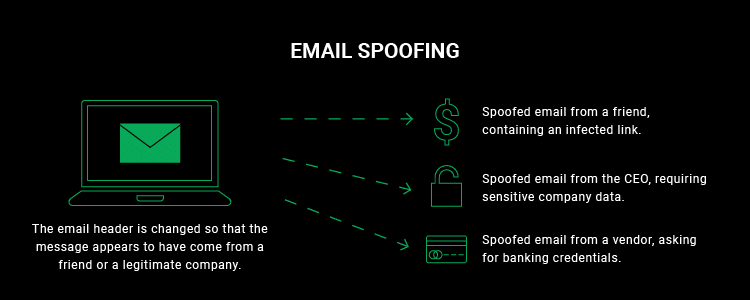
Email spoofing involves the forgery of an email header so that the message appears to originate from someone other than the actual source. This technique is frequently used in phishing attacks to deceive the recipient into trusting the email. Email spoofing can lead to identity theft if individuals are tricked into sharing personal or financial information.
Protecting against email spoofing involves a combination of technical and human solutions. Email authentication protocols like SPF, DKIM, and DMARC can help in verifying the legitimacy of email senders. Users should also be educated to scrutinize email headers, particularly in messages requesting sensitive information. Awareness of the common signs of spoofed emails is critical in preventing identity theft.
Business Email Compromise (BEC)

Business Email Compromise (BEC) is a sophisticated scam targeting businesses that regularly perform wire transfer payments. BEC attacks often involve compromising legitimate business email accounts through social engineering or computer intrusion techniques. Once an attacker gains access, they can impersonate company executives or vendors to request fraudulent transfers of funds.
Preventing BEC requires a multi-faceted approach. Organizations should implement strong internal controls on financial transactions, such as secondary verification methods for wire transfer requests. Training employees to recognize the signs of BEC and maintaining robust cybersecurity measures, including two-factor authentication for email accounts, can significantly reduce the risk of these costly scams.
The Bottom Line
Navigating the landscape of cyber threats in email requires constant vigilance and a proactive approach. From spam to sophisticated BEC scams, these threats pose significant risks to personal and organizational security. Implementing robust cybersecurity measures, educating individuals about the signs of email-based threats, and maintaining regular backups are key to safeguarding against these risks. The key takeaway is clear: in the digital age, awareness and preparedness are paramount in protecting against the myriad of cyber threats lurking in inboxes.


